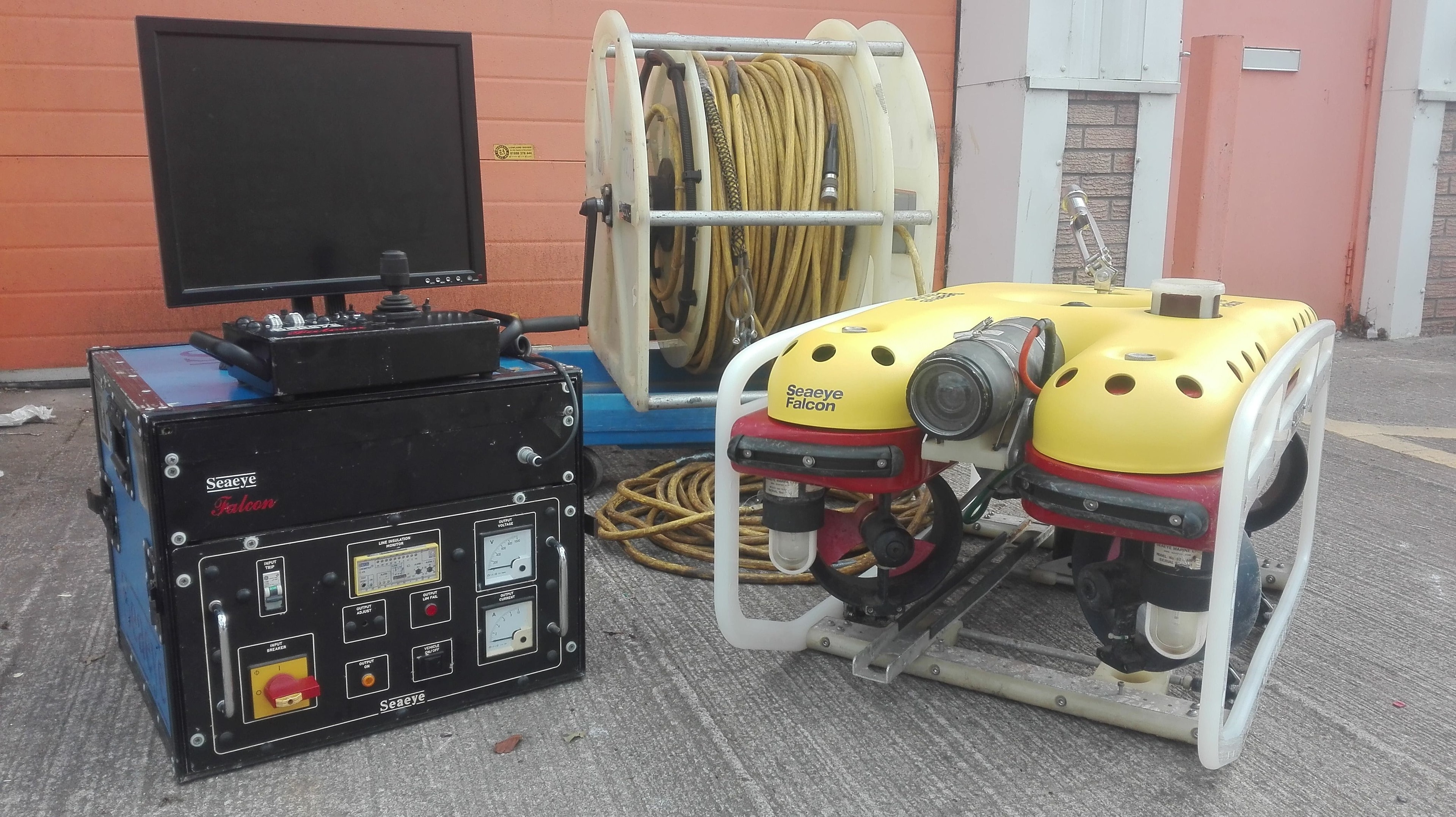

Anchor chains form the load-bearing backbone of spread-mooring and single-point mooring systems on FPSOs, semi-submersibles, and mobile offshore drilling units. A single chain failure can result in vessel drift, production shutdown, and — in severe cases — a major environmental incident. Despite this, anchor chains are among the most difficult components to inspect: they are long, heavy, partially buried, and subject to continuous cyclic loading that accelerates both fatigue and wear.
Why Anchor Chain Inspection Is Challenging
Three degradation mechanisms dominate anchor chain failure: corrosion, which reduces the cross-sectional area of the chain links; wear at the inter-link contact points, which reduces diameter and introduces stress concentrations; and fatigue cracking, which initiates at surface defects and propagates under cyclic tension. All three mechanisms are progressive and interact — a corroded link surface is rougher and wears faster; a worn link has a reduced fatigue life. Inspection programmes must address all three.
Access is the primary practical challenge. The upper portion of a chain — from the fairlead to approximately 30 m below the waterline — is accessible to ROV inspection on most vessels. The mid-water catenary section is accessible but requires careful ROV station-keeping in the presence of the chain's own motion. The touchdown zone, where the chain meets the seabed, is the most difficult section: partial burial, sediment disturbance, and restricted ROV manoeuvrability all limit inspection quality.
ROV Visual Inspection
ROV visual inspection is the baseline method for anchor chain surveys. The ROV tracks along the chain from the fairlead to the touchdown point, recording high-definition video and still images at regular intervals. The inspection team reviews the footage to identify visible corrosion, pitting, surface cracking, deformation, and marine growth that may be concealing damage.
A structured visual inspection should document the condition of every link in the accessible section, noting the location, extent, and severity of any anomaly. Standardised condition grading — typically a four- or five-point scale aligned with class society requirements — allows findings to be compared across successive surveys and trended over the asset's life.
Marine growth removal is often required before meaningful visual inspection is possible. ROV-mounted brush or water-jetting tools can clean individual links in situ, but the time required must be factored into the dive plan. In practice, cleaning is prioritised at locations where previous surveys have identified anomalies or where the chain geometry suggests elevated stress.
Diameter Measurement and Wear Assessment
Chain diameter measurement is the primary quantitative method for assessing wear and corrosion loss. Class societies specify minimum acceptable diameters as a percentage of the nominal diameter — typically 87% to 90% for studless chain and 90% to 92% for stud-link chain, depending on the class society and the chain grade.
Diameter measurements are taken at the crown and at the inter-link contact points, where wear is most severe. ROV-deployed callipers or laser measurement systems can achieve accuracies of ±0.5 mm in clean conditions. A minimum of three measurements per link is recommended at suspect locations; a statistical sample of links is measured across the full accessible chain length.
Wear is not uniform along the chain. The highest wear rates are typically found in the upper portion of the chain, near the fairlead, where chain tension is greatest and inter-link motion is most frequent. The touchdown zone also experiences elevated wear from contact with the seabed. Inspection programmes should weight measurement density towards these high-wear regions.
Inspection Planning and Class Society Requirements
Anchor chain inspection intervals and acceptance criteria are governed by the class society rules applicable to the vessel. DNV, ABS, Lloyd's Register, and Bureau Veritas all publish specific requirements for mooring system inspection, and these requirements have been progressively tightened following a series of mooring failures in the North Sea and Gulf of Mexico.
Most class societies require a general visual inspection of the accessible chain length at each annual survey, with a more detailed close-visual and measurement survey at the special survey interval (typically five years). The special survey should include diameter measurements at a statistically representative sample of links, with 100% measurement coverage at locations where previous surveys have identified anomalies.
Inspection planning should also account for the chain's fatigue history. A chain that has been in service for more than 15 years, or that has experienced a significant storm event, should be treated as a higher-risk asset and inspected more frequently than the minimum class society interval. Fatigue analysis using the chain's tension history and the applicable S-N curve can be used to prioritise inspection resources.
Reporting and Fitness-for-Service Assessment
An anchor chain survey report should present findings in a format that allows direct comparison with class society acceptance criteria and with previous survey results. For each chain leg, the report should include a condition summary, a table of diameter measurements with deviations from nominal, a log of all anomalies with location, description, and photographic evidence, and a recommendation for each anomaly.
Where diameter measurements approach or breach the minimum acceptable threshold, a fitness-for-service assessment is required. This assessment considers the remaining cross-sectional area, the applied loads, the fatigue history, and the time to the next planned inspection. The outcome is a recommendation to continue in service, to increase inspection frequency, or to replace the affected chain section.
Trend analysis is a powerful tool for managing anchor chain integrity over the long term. By plotting diameter measurements from successive surveys against time, the corrosion and wear rate can be estimated and the remaining life projected. This allows operators to plan chain replacement proactively, avoiding the cost and risk of an unplanned mooring failure.