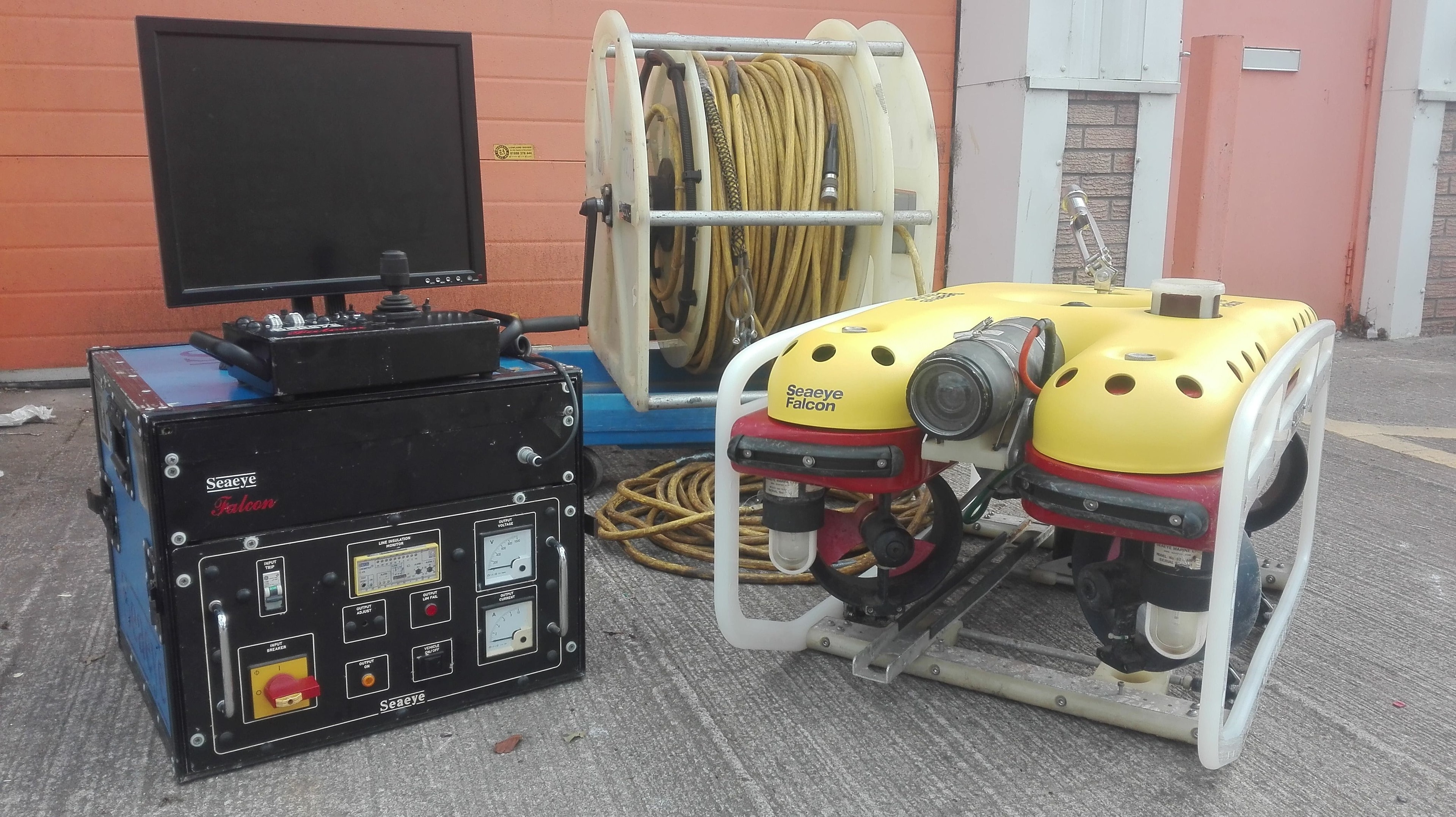

Offshore wind monopiles rely on sacrificial aluminium anodes to provide cathodic protection across the full submerged surface. The anode system is designed to maintain the steel potential at or below -800 mV (Ag/AgCl/seawater) throughout the design life of the structure. As anodes deplete, the protection level degrades — and if the potential rises above the protection criterion, corrosion accelerates. Regular CP surveys are essential to confirm that the anode system is performing as designed and to identify foundations where supplementary anode installation may be required.
ROV CP Measurement Technique
CP potential measurements are taken using a silver/silver chloride reference electrode mounted on the ROV. The probe is brought to within 50–100 mm of the steel surface at defined measurement points — typically at 1 m depth intervals from the waterline to the mudline, with additional readings at weld seams, anode attachment points, and areas of coating damage. Each reading is logged with the ROV's position and depth, and the full profile is plotted as a potential-versus-depth graph for comparison against the design criterion and previous survey results.
Interpreting CP Survey Results
A well-protected foundation shows a consistent potential profile between -900 mV and -1050 mV (Ag/AgCl) across the full depth range. Potentials more positive than -800 mV indicate under-protection and require investigation — possible causes include anode depletion, anode detachment, or coating damage that has increased the current demand beyond the anode system's capacity. Potentials more negative than -1100 mV indicate over-protection, which can cause hydrogen embrittlement in high-strength steel components and should also be investigated.
Anode Remaining Life Assessment
ROV visual inspection of each anode provides a qualitative assessment of remaining mass. For a quantitative assessment, caliper measurements of anode dimensions allow remaining mass to be calculated and compared to the design consumption rate. Foundations where anode remaining life is projected to fall below the next scheduled inspection interval are flagged for supplementary anode installation — typically achieved by ROV-installed bracelet anodes or impressed current systems where the foundation geometry permits.