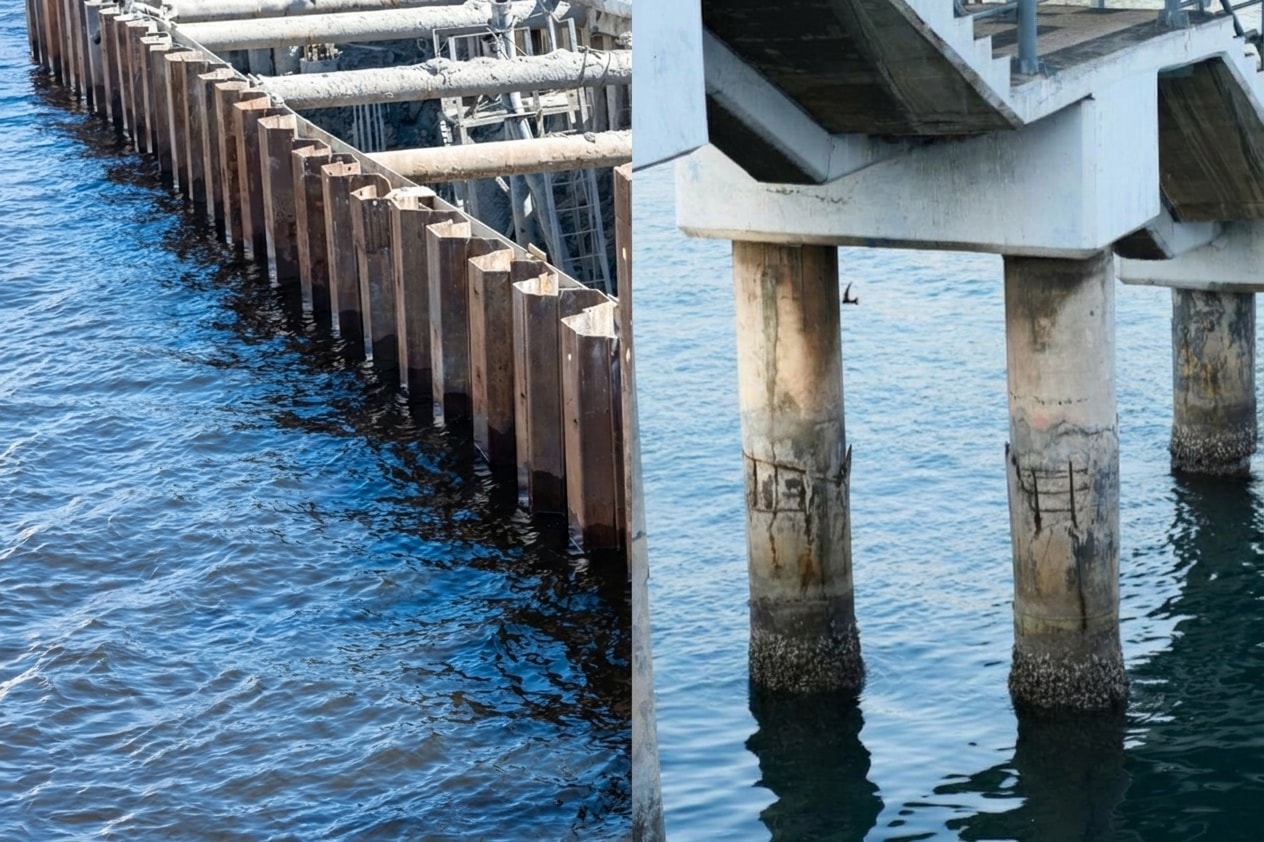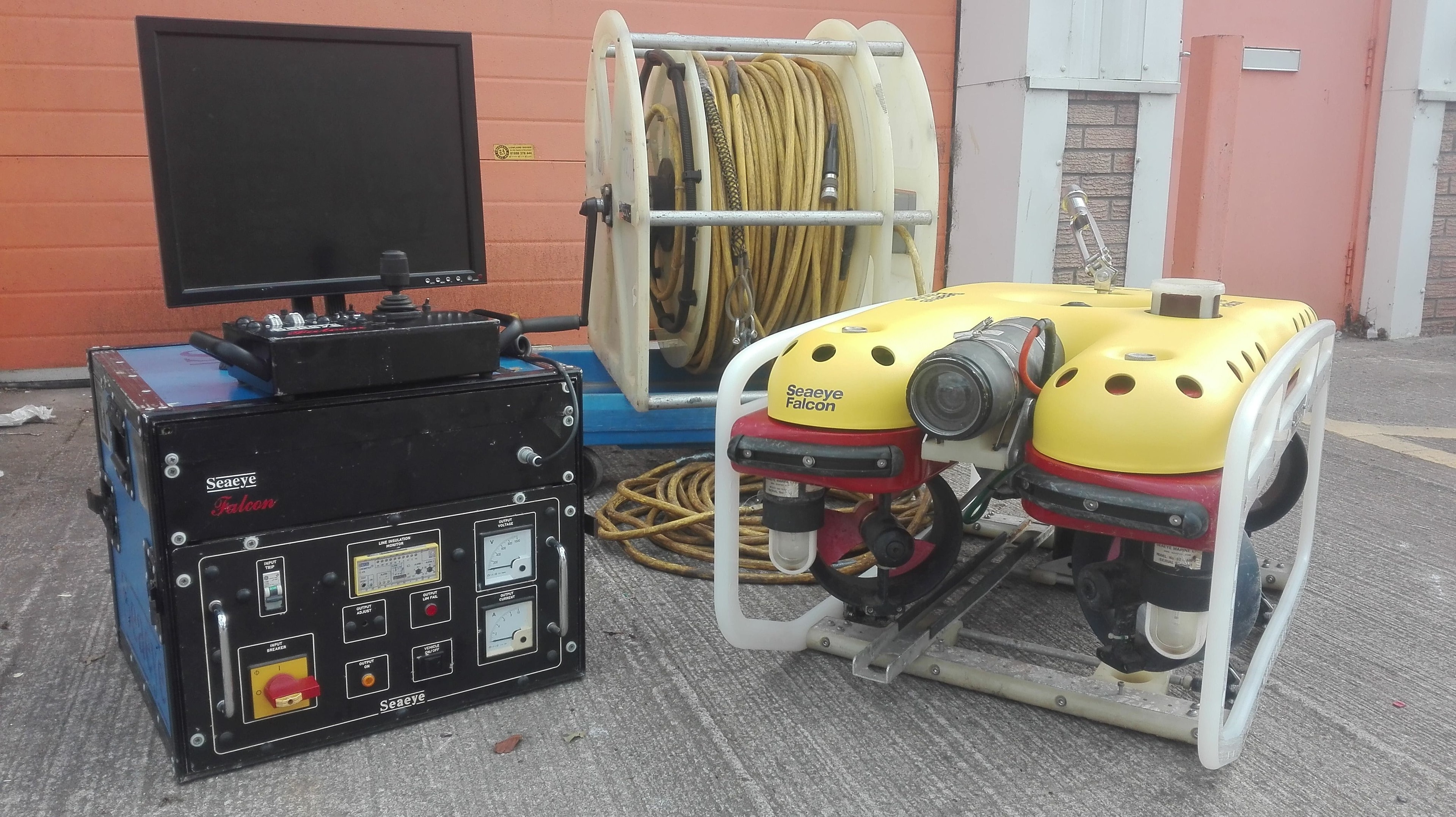

Marine growth colonises offshore wind foundations rapidly after installation. Within two to three years, a monopile in temperate waters can accumulate a biofouling layer 100–300 mm thick, dominated by mussels, barnacles, and soft corals. This growth increases the effective diameter of the pile, raising the hydrodynamic drag and inertia coefficients used in structural load calculations. If the as-built structural model does not account for the actual growth profile, fatigue life predictions may be non-conservative.
ROV Marine Growth Survey Methods
ROV surveys characterise marine growth by species, thickness, and coverage at defined depth intervals. Thickness is measured using a mechanical probe or ultrasonic gauge pressed against the growth surface, with readings taken at the cardinal points of the pile circumference. The survey output is a growth profile — thickness versus depth — that feeds directly into the structural engineer's load recalculation. Video footage documents the dominant species and growth morphology, which affects the drag coefficient applied in the analysis.
Cleaning for Inspection Access
Where weld inspection or UT thickness measurement is required, the growth must be removed from the inspection area. ROV-mounted rotary brushes and water jetting systems can clean defined areas of the pile surface without damaging the underlying coating. Cleaning is typically limited to the specific weld seams and measurement points identified in the inspection plan — full-pile cleaning is rarely justified on structural grounds and carries a significant environmental impact from the release of biofouling material into the water column.
Structural Impact and Remediation Thresholds
The structural engineer uses the measured growth profile to update the hydrodynamic load model and recalculate fatigue life. If the updated analysis shows that the remaining fatigue life has fallen below the inspection interval, the operator must either increase inspection frequency, implement a growth management programme, or accept a reduced operational life for the affected foundation. Growth management — periodic cleaning to maintain the pile diameter within the design envelope — is the preferred option for high-value assets where fatigue margin is limited.