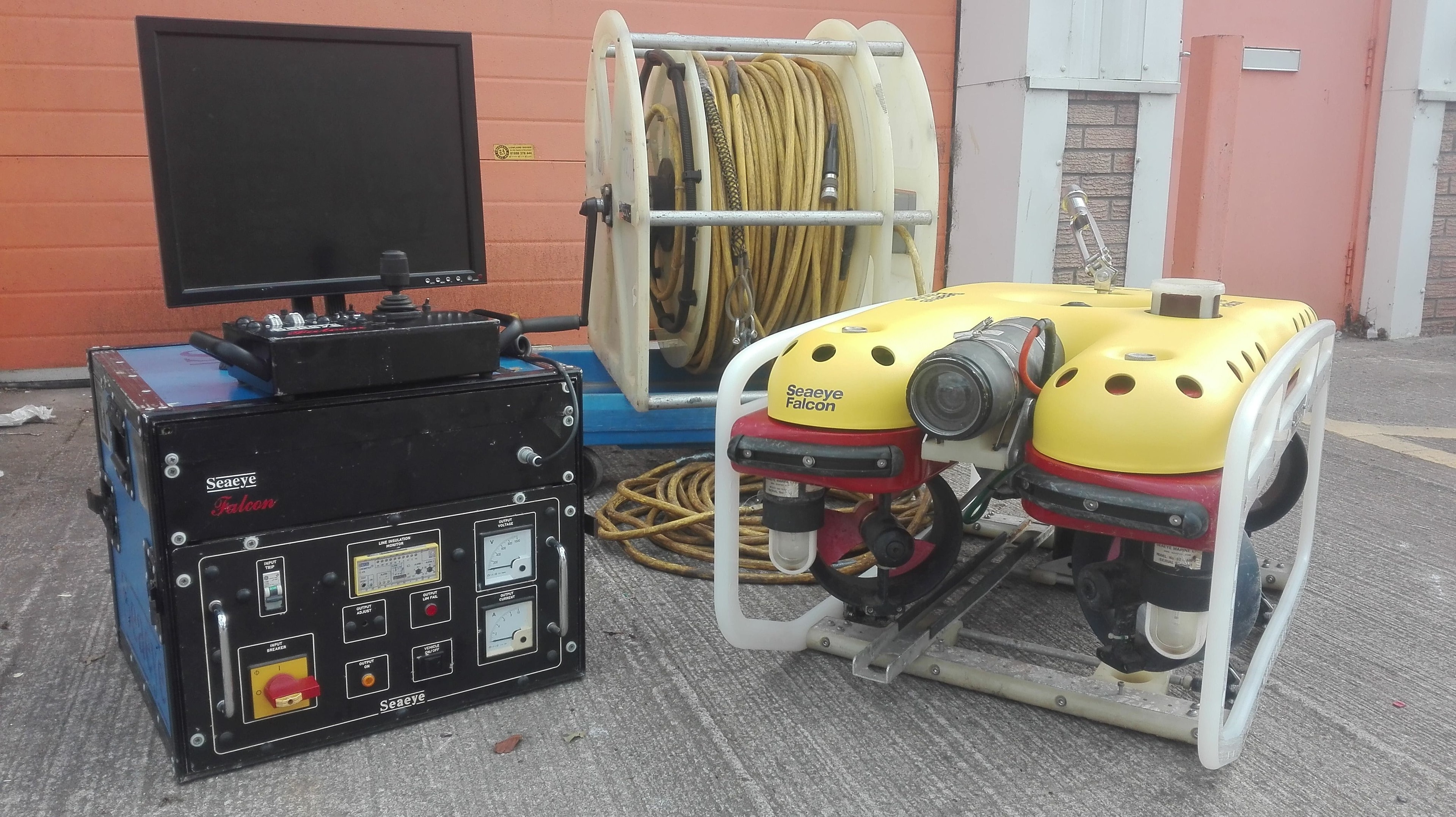

The transition piece (TP) is the structural interface between the monopile and the turbine tower. In the dominant grouted connection design, the TP sleeve overlaps the top of the monopile and the annular gap is filled with high-strength cementitious grout. Early offshore wind farms experienced widespread grout cracking and slippage due to underestimation of the cyclic loading environment, leading to costly remediation campaigns and revised design standards. Inspection of the grouted connection and the TP structure is now a mandatory element of in-service survey programmes.
Visual Inspection of the Grouted Connection
ROV visual inspection of the grouted connection focuses on the grout line at the top and bottom of the annular gap, looking for cracking, spalling, or displacement that indicates relative movement between the TP and monopile. Grout extrusion — where grout has been squeezed out of the annular gap — is a key indicator of connection slippage and requires immediate engineering assessment. The inspection also covers the shear keys (if present), the TP flange welds, and the J-tube and cable hang-off arrangements.
Weld Inspection and ACFM Application
The circumferential weld seams on the monopile and TP are the primary fatigue crack initiation sites. ACFM probes deployed on the ROV can scan these welds without removing marine growth or coatings, detecting surface-breaking cracks and providing length and depth estimates. For welds identified as high-consequence in the structural integrity management plan, ACFM inspection at each in-service survey provides the data needed to update fatigue life predictions and justify continued operation.
Appurtenance and Anode Inspection
The TP carries a range of appurtenances — boat landing frames, ladder systems, J-tubes, and cable protection systems — that are subject to corrosion, impact damage, and fatigue. ROV inspection documents the condition of each appurtenance, noting any deformation, cracking, or loss of fasteners. Sacrificial anodes on the TP and monopile are measured for remaining mass, and the CP potential profile is recorded to confirm that the cathodic protection system is maintaining adequate protection across the full submerged surface.