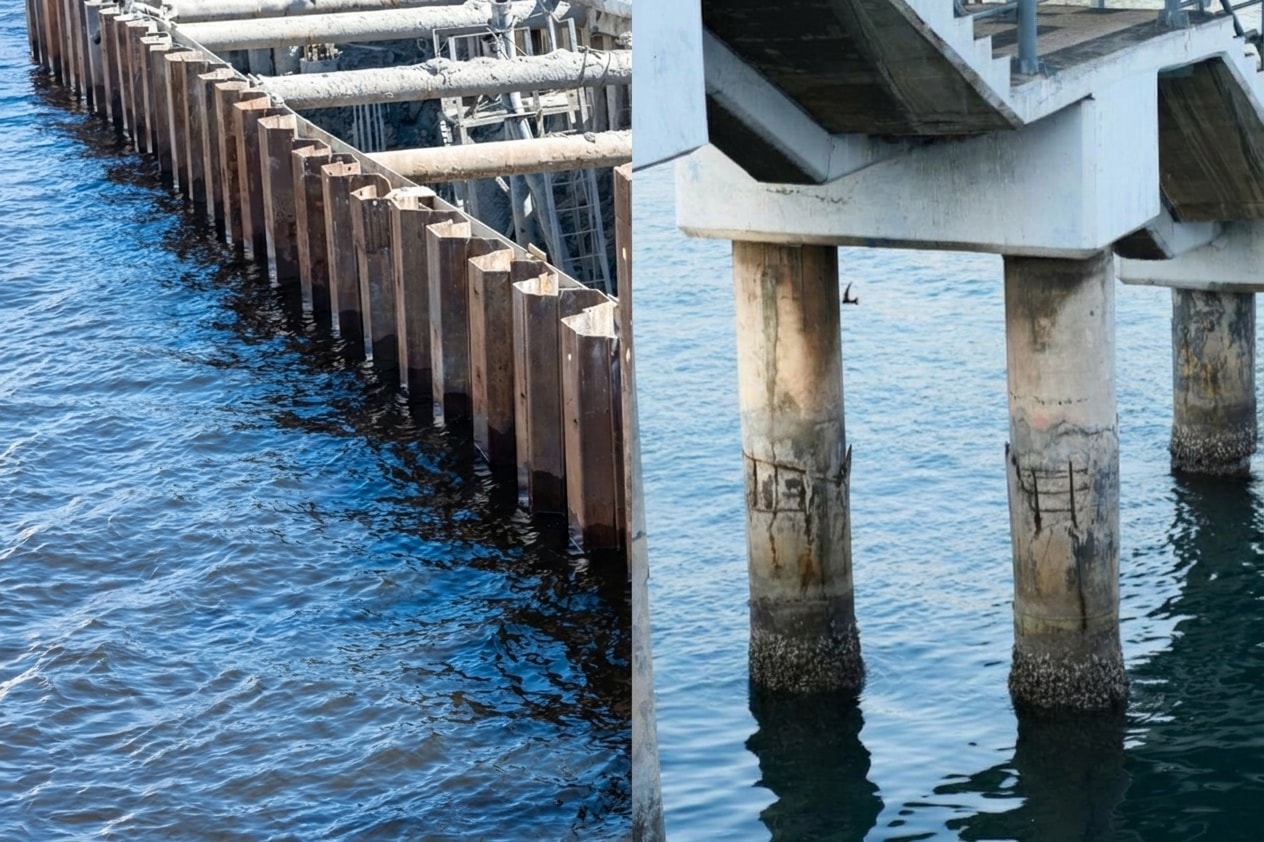
Jetties and sheet pile structures form the backbone of port and coastal infrastructure — berthing dolphins, quay walls, fendering systems, and tidal barriers all rely on the structural integrity of driven or interlocked steel and concrete piles. Unlike offshore platforms, these assets operate in shallow, high-turbidity water with heavy vessel traffic, making inspection both logistically challenging and operationally critical.
Inspection Drivers and Regulatory Context
Inspection programmes for jetty and sheet pile structures are typically driven by port authority requirements, insurance underwriters, and classification society rules where the structure supports a floating facility. In many jurisdictions, periodic underwater inspection is mandated under national port regulations or civil engineering standards.
The inspection interval is generally five years for routine surveys, with more frequent close-up inspections triggered by impact events, storm damage, or anomalies identified in previous surveys. Condition-based maintenance programmes increasingly use continuous monitoring — cathodic protection (CP) monitoring, acoustic emission sensors — to extend intervals where structural health data supports it.
Visual and Close-Up Inspection Methods
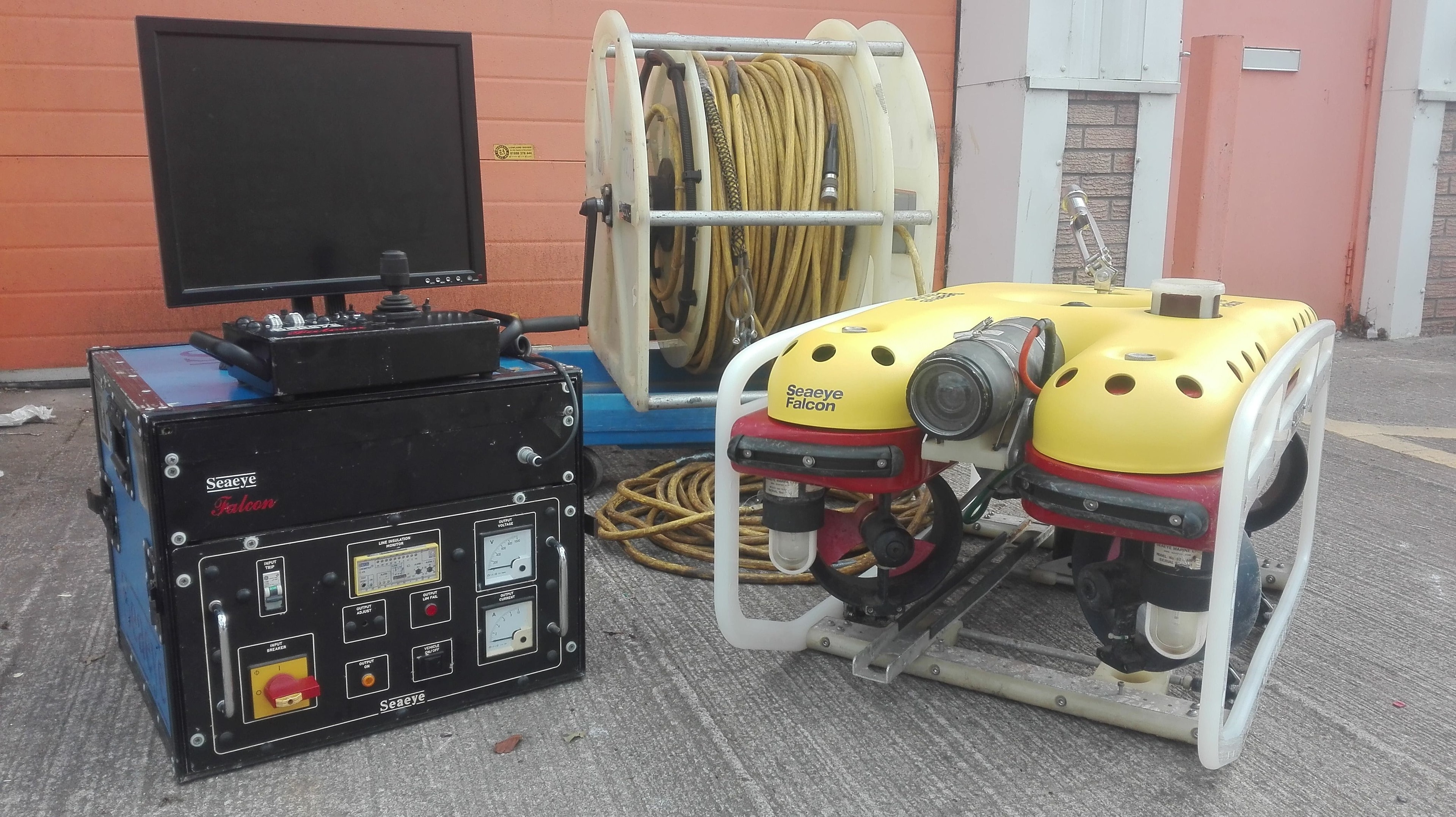
The primary inspection method for jetty piles and sheet piles is diver-conducted or ROV-assisted visual inspection. In clear water, ROV inspection is preferred for efficiency and safety — a compact observation-class ROV can survey a full berth face in a single mobilisation, capturing high-definition video and still imagery at each pile location.
Close-up inspection focuses on the splash zone and tidal zone, where corrosion rates are highest due to cyclic wetting and drying, oxygen availability, and biological activity. Steel sheet piles are inspected for section loss, pitting, weld cracking at interlocks, and loss of interlock engagement. Concrete piles are assessed for spalling, delamination, rebar exposure, and crack width.
Thickness Measurement and Section Loss Assessment
Ultrasonic thickness (UT) measurement is used to quantify section loss in steel piles where visual inspection indicates corrosion. Diver-deployed UT probes or ROV-mounted UT systems provide spot measurements at defined grid points along the pile face. Measurements are compared against the original design thickness and previous survey data to calculate corrosion rates and residual life.
For sheet piles with heavy marine growth, cleaning is required before UT measurement. ROV-mounted rotary brush or water-jetting tools can clean a defined measurement window without requiring full pile cleaning, reducing mobilisation time and cost.
Cathodic Protection Survey
ROV-mounted CP probes are used to conduct cathodic protection surveys on steel jetty piles and sheet pile walls, eliminating the need for diver deployment in confined or high-current areas. The ROV manoeuvres the silver/silver chloride (Ag/AgCl) reference electrode to defined measurement points along the pile face, recording half-cell potential readings at each location. Data is logged in real time to the surface control system, with the ROV video feed confirming probe contact and pile condition simultaneously.
Potentials more positive than –800 mV (Ag/AgCl) indicate under-protection and elevated corrosion risk; potentials more negative than –1,100 mV indicate over-protection and potential hydrogen embrittlement in high-strength steels. Sacrificial anode consumption is assessed visually via the ROV camera — remaining anode mass is estimated from dimensional measurements, and depleted anodes are flagged for replacement with priority assigned based on local potential readings and remaining design life.
Scour and Seabed Survey
Scour at the toe of sheet pile walls and around individual piles reduces passive resistance and can lead to progressive structural failure. ROV-mounted multibeam sonar or single-beam echo sounders are used to map the seabed profile along the structure. The survey data is compared against the as-built profile and previous surveys to identify scour development, infill, or migration of scour protection material.
Reporting and Grading
Inspection findings are reported using a condition grading system — typically a 1–4 or 1–5 scale aligned with the client's maintenance management framework. Each pile or panel is assigned a grade based on the worst defect observed, with photographic and video evidence referenced in the report. Defects requiring immediate action (Grade 4 or 5) are communicated to the client in a preliminary findings report before the final document is issued.
Quantitative data — UT measurements, CP potentials, scour depths — are presented in tabular and graphical format alongside the condition grades. Trend analysis comparing current and previous survey data allows the client to track deterioration rates and optimise maintenance spend across the asset portfolio.